The Great Migration
The Great Migration: A Month-by-Month Guide
When the herds arrive, when the Mara River crossings actually happen, and why August and September are not always the best months to book. An honest guide from guides who track the herds every season.
Kenya Safari Holidays · 2026-08-14 · 8 min read
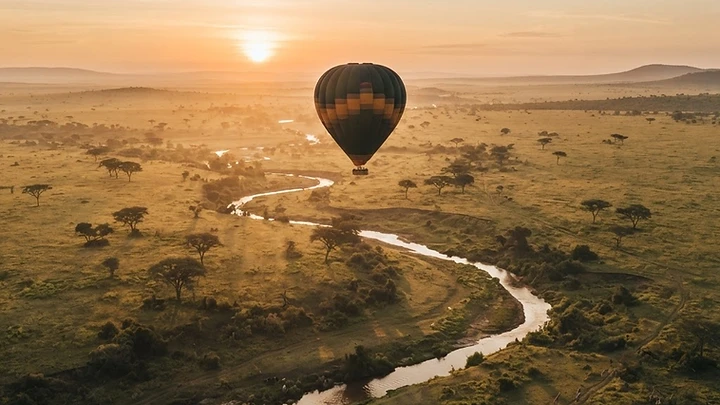
Every year around 1.5 million wildebeest, 200,000 zebra and 400,000 gazelle move north from the Serengeti into the Maasai Mara. It is the largest land mammal migration on earth, and it is the single most requested experience on any Kenya safari.
It is also the most misunderstood. The migration is not a fixed event with a published date. The herds move with the rain, and their arrival in Kenya can shift by three or four weeks from one year to the next. This guide explains what actually happens, month by month, so you can book with realistic expectations.
How the migration works
The herds follow the grass. They calve on the short-grass plains of the southern Serengeti in February, move west and north as the rains end, and cross into the Maasai Mara when the Serengeti's grazing is exhausted and Kenya's long rains have passed. They then stay in the Mara until the short rains pull them south again in November.
The Mara River is the obstacle that makes the migration famous. It is deep, fast and full of crocodiles, and the herds must cross it several times in both directions as they move between grazing areas. A crossing is not guaranteed on any given day, it depends on water levels, predator pressure and the mood of the herd.
Month by month
January to March. The herds are in the southern Serengeti and the Ngorongoro Conservation Area for the calving season. In Kenya this is a quiet, excellent period for general game viewing in the Maasai Mara, with resident predators, superb light and much lower prices.
April and May. The long rains. The herds begin moving north and west. Grass is long, roads are difficult and many camps close. It is the cheapest time to travel and the most beautiful landscape, but not the best time for a first safari.
June. The herds mass on the western Serengeti and begin to reach the Mara River. The first crossings of the season usually happen late in the month. Camps in the Mara are filling, and the grass is still high.
July. The herds are arriving in the Maasai Mara in numbers. Crossings become more frequent. This is the beginning of peak season, and the plains are beginning to fill with animals.
August. Traditionally the peak of the migration and the most reliable month for river crossings. Also the busiest and most expensive month in the Mara, with the highest vehicle concentrations at crossing points.
September. Often the best month overall. The herds are still present in force, the grass is shorter and game viewing is easier, and the crowds thin noticeably after the school holidays end. Many of our guides name September as their favourite.
October. The herds begin moving south again, with further crossings on the return. Wildlife viewing remains excellent and prices start to fall.
November. The short rains arrive. The herds have largely returned to the Serengeti. The Mara is green, quiet and very good value.
What nobody tells you
River crossings are not guaranteed. Book at least four nights in the Mara if a crossing matters to you. Two nights is a lottery.
Crossings happen away from the crowds too. Our guides know several crossing points that large groups do not use. Patience is more valuable than proximity.
The migration is not the only spectacle. In August, the concentration of vehicles at the main crossing points can be as memorable as the crossing itself, and not in a good way. A private conservancy stay gives you the same wildlife with a fraction of the traffic.
The best time for you may not be migration season. If you want big cats, easy viewing and lower prices, travel in January or February. The wildlife in the Mara is exceptional year-round.
How to plan around it
We track herd movements through our guides on the ground throughout the season, and we are honest with guests about what is realistic in their chosen window. If your dates fall at the margins, we will tell you, and usually suggest a conservancy stay with better general game viewing instead.
For a migration-focused itinerary, four to five nights in the Maasai Mara between late July and early October gives the best chance. Add two nights in a private conservancy for the freedom to follow a sighting without company.

Route
Maasai Mara › The Great Migration › Big Five Safaris
Maasai Mara
8 days
The Great Migration Signature Safari
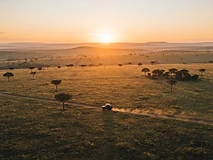
Eight days built entirely around the wildebeest migration, with four nights in the Maasai Mara, a private conservancy stay and a dawn balloon flight over the plains.
From
£4,250pp

Route
Maasai Mara › Luxury Tented Camps › Big Five Safaris
Maasai Mara
5 days
Luxury Mara Tented Camp Escape
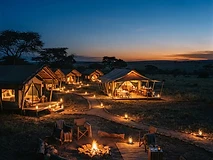
Five days and four nights in a single exceptional camp in the Maasai Mara, with a private guide, private vehicle and no moving between lodges.
From
£3,450pp

Route
Amboseli › Big Five Safaris › Luxury Tented Camps
Amboseli
7 days
Amboseli & Tsavo Explorer
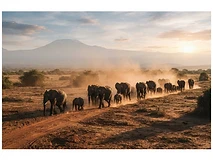
Seven days of elephant country and red dust, with Kilimanjaro on the horizon, the lava flows of Tsavo and a night in the Chyulu Hills.
From
£3,180pp