Planning
The Best Time to Visit Kenya for a Safari
Kenya is a twelve-month safari destination, but each season offers something different. Here is how to choose the right months for the wildlife, the weather and your budget.
Kenya Safari Holidays · 2026-07-02 · 9 min read
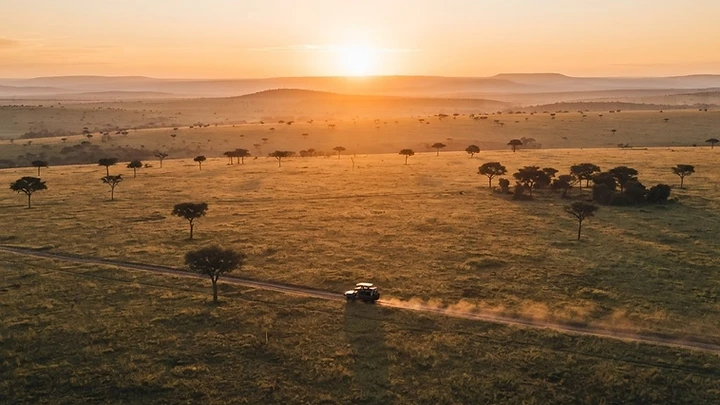
Kenya sits on the equator, which means there is no winter and no summer, only wet and dry seasons, and the movement of wildlife that follows them. That makes it one of the few safari destinations in Africa you can visit at any time of year and still have an excellent trip. Which months you choose should depend on three things: what you want to see, how much you want to spend, and how much company you are willing to keep.
The short answer
- Best overall game viewing: July to October, the long dry season
- Best for the Great Migration: late July to early October
- Best for big cats and value: January to March
- Best prices and quietest parks: April, May and November
- Best for a safari and beach holiday: December to March, or July to October
The dry seasons Kenya has two dry periods: a long one from late June to October, and a shorter one from January to March.
In the long dry season, vegetation thins, water sources shrink and wildlife concentrates around rivers and remaining water. Game viewing becomes easier and more predictable. Days are warm, nights are cool, and rain is unusual. This is peak season, and it is peak season for good reason. The short dry season from January to March is Kenya's best-kept secret. Conditions are similar, clear skies, warm days, excellent visibility, but visitor numbers are significantly lower and prices are often twenty to thirty per cent below peak. Big-cat sightings in the Maasai Mara and Amboseli are outstanding at this time.
The rainy seasons The long rains fall from late March to May, and the short rains in November.
We would not recommend the long rains for a first safari. Roads become difficult, some camps close entirely, and heavy afternoon downpours can cut game drives short. That said, the landscape is spectacularly green, birding is at its best, and rates are the lowest of the year. The short rains in November are a different proposition. They typically arrive as short, heavy afternoon showers rather than all-day rain, and the Mara and Amboseli remain very much open. November is quiet, green and excellent value, a good month for travellers who are flexible.
What the seasons mean for wildlife
The Great Migration dominates the calendar, but it is not the only consideration. Lion and cheetah are most easily seen in the dry months, when prey concentrates and grass is short. January to March and July to October are both excellent. Leopard are seen year-round in the Maasai Mara and Samburu. The dry season gives better visibility through thinner vegetation. Elephant in Amboseli are reliable at any time of year. The clearest views of Kilimanjaro come in the dry months, particularly January and February. Rhino are best seen in Lake Nakuru and the Laikipia conservancies, which are excellent year-round. Birdlife peaks during the rains. More than 500 species have been recorded in the Maasai Mara alone, and the migratory species arrive from November onwards.
What the seasons mean for your budget
Safari pricing in Kenya is driven almost entirely by demand. Migration season camps in the Maasai Mara can cost two to three times their low-season rate for the same tent. If your dates are flexible, travelling in late January, early February or November can save a substantial sum without any meaningful compromise on wildlife. If you must travel in August, book nine to twelve months ahead, the best camps sell out early and prices only rise.
https://www.youtube.com/embed/0FErHRJtAJc
Combining a safari with the coast
The Kenyan coast has its own seasons. The driest and calmest months are December to March, when the ocean is clear and flat, and July to October, when the trade winds bring cooler air and excellent kite surfing. December to March is the better choice if you want to combine a safari with a beach stay. The safari areas are in their short dry season, the coast is at its best, and the two align perfectly.
Our recommendation If you can travel at any time, go in late January or early February.
You get the dry-season wildlife, the clearest mountain views, quiet parks and the best value of the year. If the Great Migration is the priority, go in September. You get the herds, shorter grass, easier game viewing and fewer people than August. And if you are booking late and August is all that remains, book a private conservancy rather than a reserve camp. You will see the same wildlife with a fraction of the traffic.

Route
Maasai Mara › The Great Migration › Big Five Safaris
Maasai Mara
8 days
The Great Migration Signature Safari
Eight days built entirely around the wildebeest migration, with four nights in the Maasai Mara, a private conservancy stay and a dawn balloon flight over the plains.
From
£4,250pp

Route
Maasai Mara › Luxury Tented Camps › Big Five Safaris
Maasai Mara
5 days
Luxury Mara Tented Camp Escape
Five days and four nights in a single exceptional camp in the Maasai Mara, with a private guide, private vehicle and no moving between lodges.
From
£3,450pp

Route
Amboseli › Big Five Safaris › Luxury Tented Camps
Amboseli
7 days
Amboseli & Tsavo Explorer
Seven days of elephant country and red dust, with Kilimanjaro on the horizon, the lava flows of Tsavo and a night in the Chyulu Hills.
From
£3,180pp